
Introduction to Wayfinding
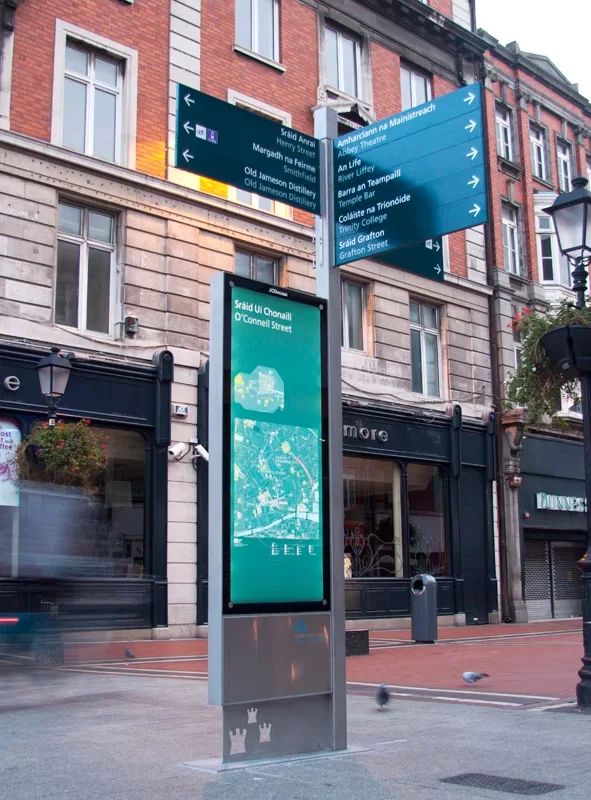
Whether in an airport, shopping centre, hospital, or city streets, the principles of wayfinding help guide individuals from point A to point B efficiently.
As a leading sign-making company, we understand the critical role well-designed wayfinding systems play in enhancing user experience and ensuring people can find their way with ease.
What Is A Wayfinding System?
Wayfinding refers to the set of architectural and informational systems that guide people through a physical environment and enhance their understanding and experience of the space.
It involves the conceptual organisation of content within a navigable environment, often referred to as the information space. It’s more than just signs; it’s an integrated approach that helps individuals navigate, find destinations, and gather information easily within built and natural environments. The ultimate goal of wayfinding is to make spaces navigable without confusion, reducing stress and saving time.
How Does Wayfinding Work?
Navigating through physical spaces can be complex, especially in unfamiliar environments. Wayfinding encompasses various cognitive and spatial abilities, such as orientation, navigation, and memory, to help individuals reach their desired destination. Effective wayfinding in physical spaces hinges on a clear understanding of the environment, including its layout, landmarks, and visual cues.
Visual elements like signs, maps, and directional arrows play a crucial role in facilitating wayfinding. These aids provide essential information about the environment, helping users orient themselves and navigate to their desired destination. The design of these visual elements is critical, as it can significantly impact the user’s experience and ability to navigate the space.
Creating a legible environment that is easy to navigate is one of the key challenges in wayfinding. This can be achieved by using clear and consistent signage, providing survey knowledge of the environment, and helping users form a mental map of the space. By doing so, users can better understand the layout of the space and navigate it with ease, making their journey more efficient and less stressful.
Types of Wayfinding Signs
Information Signs
These provide critical information about the facilities, rules, and services available.
As a wayfinding aid, they help individuals navigate environments using methods such as path following, coordinate displays, instrument guidance, and landmarks.
Directional Signs
These guide users along their journey, clearly pointing out the direction to proceed with arrows or other indicators.
Identification Signs
These are used to mark specific locations, like rooms and areas, helping users confirm their destination.
Warning Signs
Safety is a priority; warning signs are designed to be immediately noticeable and understandable.
The Four Elements of Wayfinding
Understanding the fundamental elements of wayfinding can enhance the effectiveness of navigational aids.
Orientation
Orientation is the act of determining one's location within a space relative to one's immediate surroundings and the destination. These designs help users establish their bearings quickly by providing clear and visible information that relates to the layout of the environment.
Route Decision
Once orientation is established, the next step is making a decision about which route to take. This involves clear and succinct signage that offers choices and directs flow in the most efficient manner possible.
Route Monitoring
As users move along their chosen path, they need confirmation that they are on the right track. Mental representations, including landmarks, routes, and survey views, play a crucial role in how individuals process navigational information in both physical and conceptual spaces. Our signage continuously provides this reassurance through consistent and frequent cues that confirm distances, directions, and landmarks.
Recognition of Desired Destination
The final element involves signalling arrival at the desired destination. Our designs ensure that this is clearly marked and easy to recognise, reducing any last-minute confusion and enhancing the overall user experience.
The Importance of Effective Wayfinding
Effective wayfinding systems are essential for several reasons:
Safety
Proper wayfinding contributes to the safety of an environment by guiding crowds efficiently, especially in emergency situations, and by reducing accidents due to misdirection or unclear paths.
Accessibility
Accessibility is a fundamental aspect of wayfinding. Understanding including natural and urban environments, is crucial for effective navigation. Design signs and navigational aids that cater to the needs of all users, including those with disabilities, ensuring that everyone can navigate equally and independently.
Customer satisfaction
A clear and effective wayfinding system significantly enhances customer satisfaction as it reduces stress and the effort needed to find locations within a space.
Efficiency
Efficient navigation through wayfinding saves time, which is essential in environments like airports, hospitals, and large corporate campuses.
Principles of Wayfinding Design
Wayfinding design should adhere to specific principles to ensure the wayfinding systems are effective:
Clarity and Simplicity
You should invest in designs for signs that are easily understandable with clear, straightforward information to prevent overloading the user.
Signage Typeface
Choosing the right typeface is crucial for readability and accessibility in signage design, emphasising the importance of consistency in design elements such as typography, type height, and colour choice. Select fonts that are legible from various distances and angles.
Consistent Visual Language
A consistent use of colours, symbols, and logos and physical space helps reinforce memory and improves navigation.
The visual appearance of different regions, defined by visual attributes such as colour treatments and lighting, can aid in wayfinding by helping navigators identify their location within an exhibit.
Strategic Placement
Place signs at strategic points where decisions need to be made, ensuring they are visible from a distance and different viewpoints.
Modular and Adaptable Design
Wayfinding solutions are designed to be flexible and adaptable to changing environments and information.
Effective wayfinding is a crucial component of modern environmental design, encompassing much more than the signs themselves.
At Odysea Signs, we are dedicated to creating systems that not only guide but also enhance the experience of every space. Through careful consideration of the elements, principles, and practices outlined, we ensure that our wayfinding solutions are not only functional but also integrative, helping people navigate the complexities of modern spaces with confidence and ease.
What our clients say
about us
