
A-Boards and Hanging Signs: A Guide to Pavement and Projecting Signs
A-Boards and Hanging Signs: A Guide to Pavement and Projecting Signs
Your fascia sign tells people who you are once they are standing in front of your shopfront. A-boards and hanging signs do a different job: they catch people walking along the street, before they reach you. For cafes, pubs, salons and independent shops, they are often the difference between being noticed and being walked past.
This guide covers the main types of pavement and projecting sign, the materials and fixings available, and the rules worth knowing before you put one up. It is written for businesses in Brighton, Hove and across Sussex, but the principles apply anywhere.
A-Boards and Pavement Signs
What is an A-board?
An A-board (also called a sandwich board or pavement sign) is a freestanding, double-sided sign that folds into an A shape. It goes out when you open and comes in when you close, so it can carry daily specials, offers or directions as well as your name.
Common types of A-board
- Chalkboard A-boards: a timber or metal frame with a chalkboard face. Ideal for cafes, pubs and restaurants that change their message every day.
- Poster frame A-boards: a snap frame that holds a printed poster behind a clear cover. Quick to update with seasonal promotions.
- Printed panel A-boards: a fixed printed aluminium composite face for a permanent, branded message.
- Painted timber A-boards: hand-finished boards that match a painted fascia, popular with independents and heritage shopfronts.
- Swinging pavement signs: a sign that hangs inside a frame and pivots in the wind, which keeps it more stable on exposed streets and seafronts.
- Weighted forecourt signs: a base filled with water or sand for sites where wind is a real problem.
What makes a good A-board
Keep the message short. People read a pavement sign in a couple of seconds, so your name, what you offer and one reason to come in is usually enough. Use the same colours and typeface as your fascia so the shopfront reads as one design, and choose a frame heavy enough to stay upright in a coastal wind.
Hanging and Projecting Signs
What is a hanging sign?
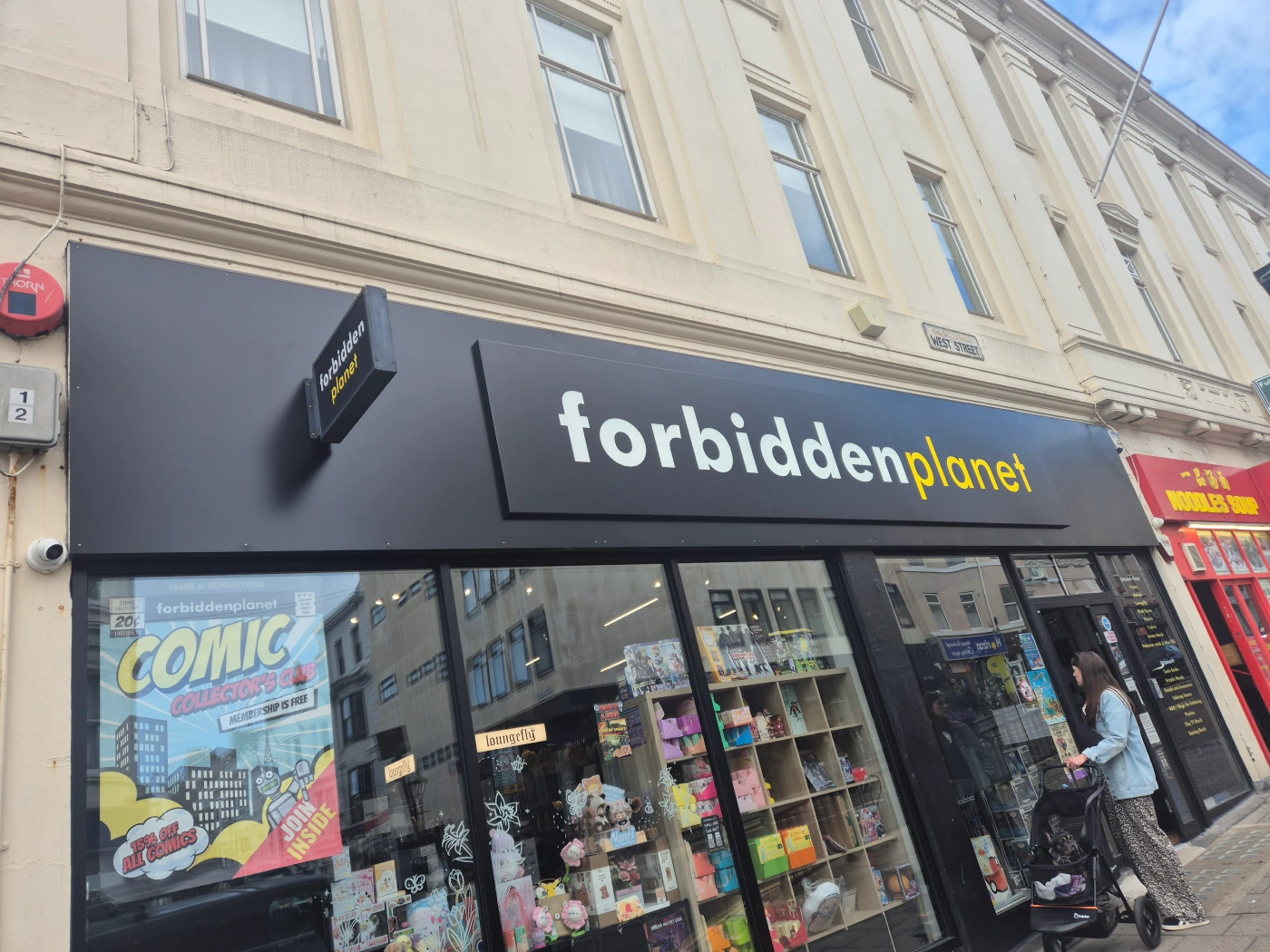
A hanging sign is fixed to the building on a bracket and projects out over the pavement, so it can be read by people walking towards you rather than only from directly in front. A projecting sign does the same job but is usually fixed rigidly to the wall or bracket rather than hung from it. Both are a traditional feature of pubs and high street shops, and they still work.
Types of hanging sign
- Painted timber: the classic pub and independent shop sign, painted or carved and finished for outdoor use. See our wooden signs page for more.
- Aluminium composite: a lighter, lower-maintenance alternative with a printed or vinyl face.
- Shaped signs: signs cut to the outline of a logo or object rather than a plain rectangle or oval.
- Illuminated projecting signs: double-sided lightboxes or externally lit signs for businesses that trade after dark.
Brackets and fixings
Brackets range from traditional scrolled ironwork to simple modern flat bar in black, steel or a brand colour. The bracket matters as much as the sign. It has to suit the building, carry the weight in high winds and be fixed securely into sound masonry. We assess the wall and the fixing at survey before anything is made.
Getting the Rules Right
A-boards on the pavement
Putting an A-board on the public pavement is controlled by the local council as highways authority, and the rules vary from place to place. Some councils allow them with conditions, some require a licence and some restrict them in busy or historic areas. The board must not block the footway or create a hazard, particularly for wheelchair users, pushchairs and people with visual impairments. If you have a private forecourt, keeping the board within your own boundary is usually simpler. It is worth checking with your council before you buy.
Hanging and projecting signs
Projecting signs need to clear the pavement by a safe height and sit within the limits the council sets for anything over the highway. Whether you need advertisement consent depends on the size, position and lighting of the sign. Illuminated projecting signs usually need consent, and signs on listed buildings or in conservation areas have tighter rules. Our advertisement consent guide explains the wider rules for business signs.
Looking After Your Signs
A-boards take knocks every day, so choose a frame that can be repaired or have its face replaced. Painted timber signs benefit from a regular check and a fresh coat every few years, especially near the sea. Check brackets and fixings at the same time: a hanging sign is heavy and exposed to wind, and a loose fixing should be dealt with straight away. We repair and maintain signs, including signs we did not make.
What Affects the Cost?
For A-boards, the main factors are the frame, the face material and whether the design is printed, painted or chalkboard. For hanging signs, it is the size, the material, whether it is double-sided or shaped, the bracket and any lighting. We provide a fixed, itemised quote before any work starts.
A-Boards and Hanging Signs from Odysea Signs
We design, make and install A-boards, hanging signs and brackets in-house at our Brighton workshop, for shops, cafes, pubs and independents across Sussex. We can match them to an existing fascia or design the whole shopfront together. See our outdoor signs and shop signs pages for more.
Get in touch with Odysea Signs for a free, no-obligation quote. Call 01273 569097 or send us your details.
What our clients say
about us
